E-Paper


Why rising ammonia in Yamuna threatens Delhi’s drinking water supply
High ammonia concentrations indicate pollutants and make the water more difficult to treat for drinking.

 Prefer HTon Google


Ammonia levels in the Yamuna at Wazirabad have climbed to 1.5-2 parts per million (ppm), above the 0.9 ppm threshold beyond which Delhi's water supply operations begin to be affected.
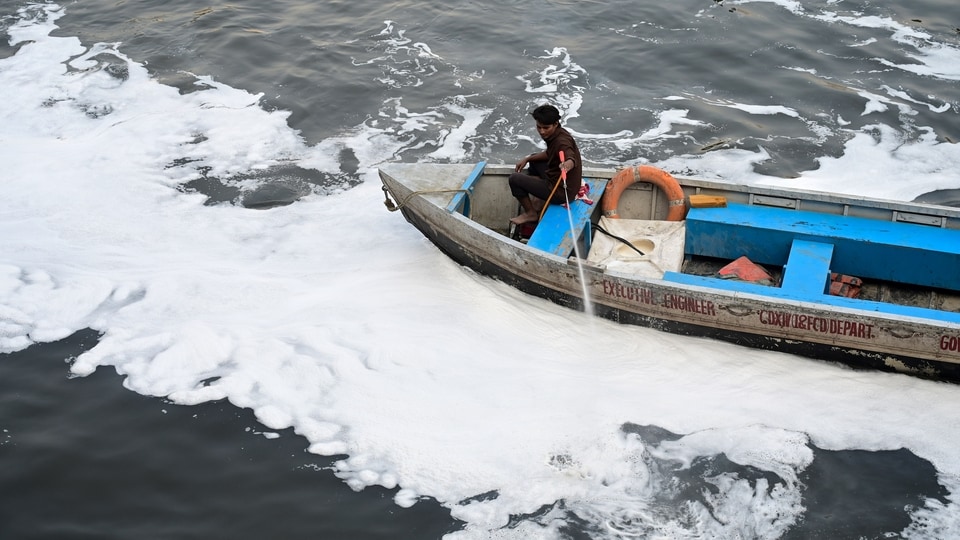
The spike has once again exposed the vulnerability of the capital's drinking water supply to pollution entering the river upstream, even as the water body continues to deteriorate dramatically after entering the city.
Ammonia is a nitrogen-based compound that enters water bodies primarily through untreated sewage, industrial effluents and agricultural runoff. High concentrations indicate pollutants and make the water more difficult to treat for drinking.
Delhi Jal Board (DJB) officials say the treatment plants can handle ammoniacal nitrogen concentrations of around 1 ppm through conventional chlorination. Beyond this level, chlorination can form toxic chloramines, necessitating treatment and dilution of the contaminated raw water with cleaner supplies.
The impact is felt particularly at the Wazirabad and Chandrawal water treatment plants, which draw raw water from the Yamuna. When ammonia levels rise, production is curtailed, and the DJB relies on alternative sources, including water delivered via the Munak canal, to dilute the polluted supply. Dilution can help manage ammonia concentrations of up to around 2-2.5 ppm, officials said.
NDMC has issued an advisory stating that water supply to areas fed by the Sonia Vihar plant may be affected. Normally, the Sonia Vihar water treatment plant draws raw water from the Upper Ganga Canal. Still, operations on the canal were just restored after its annual maintenance period, an official said.
Over the years, Delhi and Haryana have repeatedly traded allegations over the sources of ammonia pollution. The DJB has attributed recurring spikes to untreated industrial discharge entering the Yamuna upstream of Wazirabad.
Among the suspected sources are the Panipat industrial drain and the intermixing of industrial wastewater with freshwater canals in Sonipat. The latter involves two parallel drains, DD-6, carrying industrial waste, and DD-8, carrying freshwater, which run alongside each other for nearly 10km.
Haryana has maintained that there are no sources of pollution leakage in its industrial areas. Work to prevent intermixing through a pipeline is being undertaken in accordance with directions from the National Green Tribunal.
Are ammonia spikes more frequent in winter?
Ammonia episodes are particularly common in the winter months between November and March, when reduced river flows mean pollutants are less diluted, allowing their concentrations to rise. Delhi typically witnesses 15-22 such episodes annually, with ammonia levels crossing 1 ppm and sometimes remaining elevated for several days.
The ammonia problem upstream of Wazirabad is primarily a drinking water concern. Downstream, however, the river faces a much larger pollution crisis.
After Wazirabad, the Najafgarh drain, which accounts for nearly 69% of the pollution load entering the Yamuna in Delhi, meets the river. Another 17 major drains discharge sewage into it as it flows through the capital.
Consequently, the 22km stretch of the Yamuna in Delhi contributes roughly 75% of the river's total pollution. Dissolved oxygen, essential for aquatic life, falls to zero at several downstream monitoring points, while biological oxygen demand and faecal coliform levels rise sharply.
The contrast is stark: while ammonia contamination upstream threatens the city's drinking water supply, untreated sewage and industrial waste downstream are effectively depriving the river of the conditions necessary to sustain aquatic life.
A government official explained that water treatment at older plants relies on chlorination, and the supply is disrupted if ammonia levels exceed 1 ppm, which can form toxic chloramine compounds. The ozonation-based advanced plant helps us tackle pollution levels up to 4-5 ppm, which cover over 90% of such episodes.
The problem of high ammonia levels in raw water is observed year-round. Still, the frequency of ammonia spikes in winter is higher, with the city experiencing 15-20 such episodes each year.
The spike comes as the city prepares for the Chhath festival. While Delhi Jal Board has not issued any official advisory, the New Delhi Municipal Council, in a statement, said that due to a sudden increase in pollution levels in Yamuna raw water, water production at Sonia Vihar WTP has been curtailed, affecting water supply in its command area, including several NDMC areas. The local body has requested residents to cooperate and store additional water.
"We have started getting water from the Upper Ganga Canal after completion of its maintenance period, and sludge washing has been carried out over the last 24 hours. We will use Ganga water to dilute the raw water supply to minimise the impact," a DJB official said.