
 E-Paper



The importance of teaching our students about failure
Education's purpose is to prepare young people for life. Beyond preparing them for examinations, we need to prepare them for the inevitable failures life brings

 Prefer HTon Google


When I was an engineering undergraduate at BITS Pilani, nearly 40 years ago, we lost three students in my cohort to suicide during college, and two more not too long after. Nearly 1% of our entire batch. These deaths seemed so difficult to understand at the time.
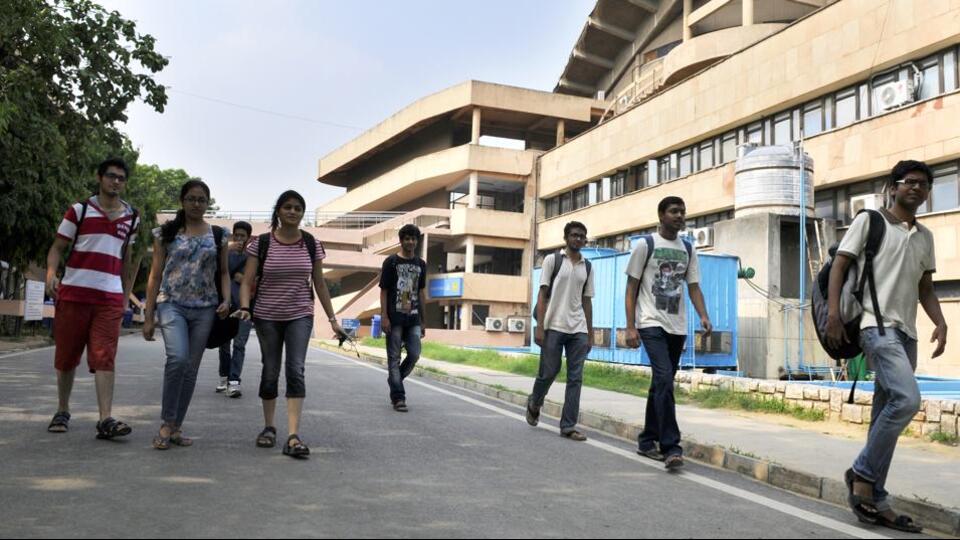
The batchmates we lost were young people who had made it into one of India’s leading engineering institutions and were, by all societal standards, successful young people. Yet, for some of them, life became unbearable. I thought about those friends when I heard about the student who died by suicide at IIT Bombay last week.
The circumstances surrounding that death remain under investigation, and we should not be drawing conclusions about that one student from an incomplete account of his final hours. That said, we should also not treat this death as an isolated event.
Student suicides are not a problem specific to India, and are hardly unknown at Princeton University, where I have taught since 2009, or at other American universities.
Among full-time US college students aged 18 to 22 years, about 11-15% have reported serious thoughts of suicide in the previous year, depending on the survey.
The pressures can be particularly intense in high-achieving environments. Research from the US – and I use US examples only because there is more research on these issues there – has repeatedly found elevated levels of anxiety, depression and other problems in high-achieving student populations relative to national norms. Young people in India are not fundamentally different from young people elsewhere in their response to academic pressure.
In India, the National Crime Records Bureau recorded 14,488 suicides among people categorised as students in 2024. Students accounted for 8.5% of all reported suicides in that year. The numbers are so large that it would be a mistake to think of student suicides as a series of individual tragedies. In India, a recent, nationally representative mortality study found that 44% of all suicides occurred among people aged 15–29 between 2001 and 2019.
Among women, the figure was 56%. Family problems were the most commonly recorded reason for female suicide deaths, accounting for nearly third of suicides in 2020.
But that is a broad definition. Family conflict, intimate relationships, social isolation, mental illness, academic stress and economic uncertainty can interact in ways that are impossible to unpack after the suicide has occurred.
A bad examination result can be devastating to a young person when it is seen as a measure of their intelligence, worth, and future. In a study based on combining results from 52 individual studies from multiple countries, most reported that academic pressure or the timing of the school year was correlated with at least one adverse mental-health outcome, including anxiety and depression, and suicidal ideation.
Adolescence has always been a fraught time historically and in nearly every society. These are years of extraordinary intellectual development. But the parts of the brain involved in impulse control and regulating emotion are not yet fully formed at that age. Young people can, therefore, be quite capable of solving difficult mathematical or engineering problems while still misjudging the permanence of a decision made during an acute emotional crisis. We know this but have not developed actionable solutions that recognise these challenges.
How do we tackle the problem of student suicides? Building resilience is one of the most important things we can teach students, before they encounter their first serious failure. A young person who has been taught since childhood that a 95% mark is success and anything less is failure will have a dangerously distorted view of what life is about.
Parents have a large role to play. We should ask less often, “What rank did you get?” and more often, “What did you learn?” Although that seems idealistic in an exam-driven society, my experience has been that early performance in exams has been poorly correlated with eventual life success.
The most successful corporate leaders, engineers, or even academics that I know were not ones with the highest grades in college. Mine certainly weren’t, and from what we read of history, neither were those of the father of our nation. It is a question of finding the path that works for you.
If we could communicate to the youth that changing courses, repeating a year, taking a different college, failing an examination, or choosing a career that does not fit the original plan are ordinary events in a long life, we could do so much better.
University counselling services cannot compensate for an institutional culture in which students view seeking help as an admission of weakness. Disciplinary systems should distinguish between maintaining academic standards and humiliating poor performance.
We also need to pay attention to a less discussed intervention – connectedness. Studies have shown that young people who feel that they belong to a school or university, that adults care about them as individuals, and that they have people to turn to are at lower risk of suicidal thoughts and behaviour. Belonging is protective and we need to build that systematically.
We should remember and mourn the student who died at IIT Bombay because his death diminishes us all. Not as a statistic or an example in an argument about examinations, caste, or the use of ChatGPT. But we have to recognise that the problem of youth suicides is much larger than that one student.
The purpose of education is to prepare young people for life. Beyond preparing them to succeed in examinations, we need to prepare them for the inevitable failures and reversals that life brings.
Ramanan Laxminarayan is president, One Health Trust, and author of the book, Bacteria to Buddha: How Cooperation Shaped Consciousness — and Makes Us Human. The views expressed are personal


