
 E-Paper



Scientifically Speaking: AI changing biology but it won’t cure all diseases
In an Anthropic survey of nearly 52,000 Americans, almost half included curing cancer or Alzheimer’s among their top hopes for AI


Artificial Intelligence (AI) systems can predict protein structures, carry out complex analyses, and help scientists move from an idea to an experiment.
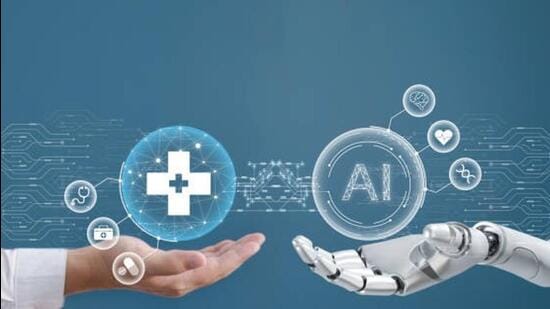
The greatest opportunity for AI will be at the intersection of biology and healthcare. From hunting for new enzymes hidden in public databases to reading medical images for earlier diagnosis, AI is already revolutionizing these fields.
Don’t believe me? In an Anthropic survey of nearly 52,000 Americans, almost half included curing cancer or Alzheimer’s among their top hopes for AI. The major AI laboratories see biology as the next frontier too.
The clearest demonstration of what AI can currently do for biology is AlphaFold, whose creators shared half of the 2024 Nobel Prize in Chemistry. Proteins are chains of amino acids that fold into three-dimensional shapes, which help determine what they do. Scientists can read a protein’s string of amino acids relatively easily. But the sequence alone does not reveal the shape, which can take months or years to determine in a laboratory. AlphaFold predicts the likely shape from the sequence. Although it isn’t perfect, it has predicted structures for more than 200 million proteins.
Two recently published papers show where AI may be taking biology next.
A paper in Science describes Biomni, an AI research assistant for biology and health research. A researcher can ask questions, use it to find and clean data, choose software, write code and analyze results. In one published example, Biomni analyzed 458 files from wearable sensors in less than an hour. The researchers estimated that a person would need about 60 hours to perform a similar task. It also designed the DNA pieces and laboratory steps for a CRISPR cloning experiment that scientists then completed successfully.
Robin, described in another paper in Nature, is closer to a semi-autonomous scientific collaborator. Researchers asked it to find possible treatments for dry age-related macular degeneration, a major cause of blindness. It reviewed 551 papers in 30 minutes and proposed helping cells at the back of the eye clear waste. Human researchers then tested several candidates that it suggested, and two improved that ability in cells. Robin then analyzed the results and suggested what to do next. It did not perform the experiment or show that the drugs would preserve sight, but it helped move from a disease question to an experiment and then to the next hypothesis.
Also Read: Scientifically Speaking: Do early winners become winning adults?
We do not yet have a general artificial scientist that can choose an important question, devise an unfamiliar experiment and know whether the answer matters. But we are getting closer. Ginkgo Bioworks, which runs automated laboratories, has gone a step further by connecting robots to an AI system from OpenAI. The AI suggested recipes for making a protein in a test mixture. The robots tested them and returned the results. Over six rounds and more than 36,000 reaction conditions, the system reduced the estimated cost per gram of protein by 40 percent compared with the benchmark used in the study.
Would this concern me if I had been starting my career in biomedical science right now? Absolutely not. Human experts will remain essential for defining important problems, checking the work, and steering the direction of science. Science is, after all, a human endeavor.
The scale of the problems we face, including the ones where the public sees the most potential, will not be solved by AI alone.
Let’s take cancer. Cancer is not one disease, but hundreds of diseases that arise from different genetic changes in different tissues. Scientists have made enormous progress without AI. Some cancers can now be cured, and many others can be controlled for much longer than they once were. Overall cancer death rates have fallen for more than two decades.
But progress has been uneven. Sometimes scientists know exactly what is causing cancer and still struggle to stop it. For example, a faulty form of a protein known as KRAS can leave a growth signal permanently switched on. It looked like an obvious target, but the protein was smooth and compact, with almost nowhere for a drug to attach. The first drug aimed directly at one form of KRAS was approved only in 2021, nearly forty years after the target was identified. Even now, it works only for cancers carrying one particular change, and tumors can eventually find ways around it.
Could AI have shortened that search? Perhaps. It might have helped screen more molecules or identify a hidden pocket sooner. But we won’t know for sure. The eventual breakthrough still depended on decades of chemistry, experiments, and clinical trials. AI may speed up parts of this process. It won’t make cancer a problem with one easy solution.
Also Read: Scientifically Speaking: Do early winners become winning adults?
Alzheimer’s has been difficult for a different reason. For decades, scientists focused on two abnormal proteins that build up in the brain. One, called amyloid, forms sticky plaques between brain cells. The other, tau, forms tangles inside them. This led to the persuasive theory that amyloid starts accumulating first, tau damage follows, brain cells die, and memory begins to fail. The idea gained support because rare inherited mutations that increase amyloid can cause Alzheimer’s unusually early in life.
But the common form of Alzheimer’s, which develops later in life, has proved more complicated. Some people accumulate large amounts of amyloid without developing dementia. Many drugs designed to remove it failed. Newer treatments can clear amyloid and modestly slow cognitive and functional decline, but they do not stop or reverse the disease.
Amyloid may still matter. The problem may be that treatment starts too late, after damage has spread. Or amyloid may be only one part of a disease that also involves tau, inflammation, blood vessels and ageing itself. That is why Alzheimer’s has been so difficult: scientists may know some of the important pieces without yet understanding how they fit together. Trials are now testing whether removing amyloid before symptoms appear can delay dementia.
Google DeepMind’s Demis Hassabis, one of the creators of AlphaFold, has said that AI could one day help cure all diseases. It is an extraordinary ambition. But the history of cancer and Alzheimer’s suggests why faster prediction will not be enough. Biology is complicated and messy in ways that machines or humans can’t fully predict.
We will need scientists who understand both digital and experimental biology. They must know what data to trust, which question is worth pursuing and when an elegant answer makes no sense in an actual cell or human body.
Anirban Mahapatra is a microbiologist, author, and science leader. His work spans microbes, medicine, AI, and the institutions that shape science. His most recent book is When the Drugs Don’t Work. The views expressed are personal


